
The Blue Mountains are full of life, but not always in the obvious, walk-up-and-see-it way. Some creatures are loud, colourful and easy to notice around picnic areas. Others are shy, nocturnal, threatened or tucked into habitats so fragile that the best thing you can do is admire them from a distance and leave the bush exactly as you found it.
That is part of the fun. A wildlife day in the Blue Mountains is not a zoo checklist. It is the possibility of hearing a lyrebird in a gully, seeing a wallaby pause near a track, watching cockatoos move across the sky, or learning that some of the region's most important animals may be nearby even when you never see them.
For families, schools, seniors, photographers and visitor groups, Sydney minibus hire makes this kind of day easier. You can start early, carry binoculars and camera gear, stop at lookouts and picnic areas, and add a wildlife park if the bush stays quiet.
Koala
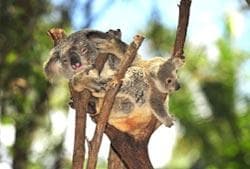
The koala is one of Australia's most loved animals, but it is not one you should expect to spot easily in the Blue Mountains. Koalas do occur in parts of the Greater Blue Mountains region, but their populations are patchy and low-density, and they spend much of the day resting high in eucalypt trees.
That makes a wild koala sighting a lucky bonus, not a promise. If you do see one, keep your distance, stay quiet and let it be. Koalas face serious pressures from habitat loss, fire, vehicles, disease and climate stress, so respectful viewing matters.
For groups that want a more reliable close-up koala encounter, a wildlife park such as Featherdale, Sydney Zoo or Taronga is the better option. You can still combine that with a Blue Mountains lookout or picnic day by minibus.
Spotted-Tailed Quoll
The spotted-tailed quoll, also called the tiger quoll, is one of the Blue Mountains' most impressive native predators. It is mainland Australia's largest carnivorous marsupial, with a spotted coat, a long tail and a secretive life in forests, gullies and rocky country.
This is not an animal most visitors will ever see on a day trip. Quolls are mostly nocturnal, solitary and wide-ranging. During the day, they hide in dens, rock crevices, hollow logs or other sheltered places. At night, they hunt mammals, birds, reptiles, insects and carrion.
Its presence is still worth knowing about. The quoll tells you the bush is more complex than it first appears. Even when the track seems quiet, there are predators, prey, scent trails and night-time stories moving through the landscape.
Long-Nosed Potoroo
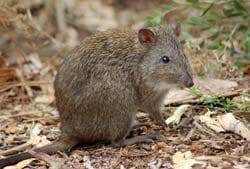
The long-nosed potoroo is a small, shy marsupial that lives close to the forest floor. It favours dense understorey, heath, damp forest and places where it can stay hidden while feeding on fungi, roots, seeds, insects and plant material.
Like the quoll, it is mostly nocturnal and rarely seen by casual visitors. If you ever come across one in the wild, count yourself very lucky. More often, you will simply be walking through habitat where animals like this can survive because the understorey has been left intact.
That is the lesson to take from the potoroo: small animals need messy, healthy ground cover. Stay on marked tracks, avoid pushing through vegetation and let the quiet parts of the bush remain quiet.
Blue Mountains Water Skink
The Blue Mountains water skink is one of the region's most special creatures because it is found only in the Blue Mountains. This endangered reptile lives in restricted highland swamp and wetland habitats, especially places with sedges, shrubs, shallow water and damp ground.
Unlike the other rare animals here, it can be active during the day in warmer months, but that does not mean visitors should go searching through its habitat. The skink's swamp environment is fragile, and trampling the edges of wetlands can do real damage.
The best way to appreciate the Blue Mountains water skink is to know it exists and protect the places it depends on. Stay on tracks and boardwalks, keep away from swamp margins, and never move rocks, logs or vegetation to look for reptiles.
Animals You Have A Better Chance Of Seeing
If your group wants a realistic wildlife moment, look first for the more visible Blue Mountains locals.
Eastern grey kangaroos and wallabies are most likely around open grassy areas, valleys and quiet clearings, especially early in the morning or late in the afternoon. Euroka Clearing and Megalong Valley are often mentioned by wildlife watchers, though sightings still depend on timing and conditions.
Wombats are mostly active late in the day and at night, but you may notice burrows, tracks or cube-shaped droppings in the right areas. Echidnas can sometimes be seen during the day, especially when they are digging through leaf litter for ants and termites.
Birdlife is often the easiest wildlife to enjoy. Listen for superb lyrebirds in damp gullies, watch for yellow-tailed black cockatoos overhead, and look around picnic areas and forest edges for crimson rosellas, king parrots and kookaburras. Admire them, but do not feed them. Human food is bad for native animals, even when they seem keen to take it.
Responsible Wildlife Watching
The best wildlife encounters happen when the animals barely notice you are there. Keep your distance, stay quiet, use binoculars or a camera lens instead of walking closer, and never feed wild animals.
Stay on marked tracks, especially near wetlands, creeks, swamps and fragile ground cover. Drive carefully at dawn and dusk, when kangaroos, wallabies, wombats and other animals may be close to the road. If you see an injured animal, contact a local wildlife rescue service rather than trying to handle it yourself.
For groups, set expectations before the day begins. You may see kangaroos, wallabies, birds or an echidna. You are very unlikely to see a wild koala, quoll, potoroo or Blue Mountains water skink on a normal day trip. That does not make the day a failure. It simply means the bush is being the bush.
Wildlife Parks And Sanctuaries Near Sydney
If your group wants guaranteed close-up animal encounters, add a wildlife park or sanctuary before or after the mountain section of the day. These stops are especially useful for children, school groups, international visitors and seniors who want accessible paths, toilets, education programs and a better chance of seeing native animals.
Choose the stops that fit your route rather than trying to visit them all in one day.
Easy Wildlife Day-Trip Ideas
For a family wildlife day, start with Featherdale or Sydney Zoo, then continue toward Glenbrook, Echo Point or another easy Blue Mountains lookout.
For a wild Blue Mountains day, leave early for Euroka Clearing or Megalong Valley, add a short walk or lookout, then stop for lunch in one of the mountain villages.
For a birdwatching or photography day, build around quieter lookouts, gullies and early light. Govetts Leap, Wentworth Falls, Leura Cascades and Blackheath-area stops can work well when the group has time and patience.
For a school nature excursion, combine a managed wildlife venue with a short supervised bushwalk. Students get reliable animal encounters and still experience the Blue Mountains landscape.
For a seniors' scenic wildlife route, keep the walking gentle and the stops comfortable: a wildlife park, a lookout, lunch and one short nature stop can make a better day than trying to chase too many animals.
Using Minibus Hire For Blue Mountains Wildlife Trips
Wildlife days often work best with an early start, flexible timing and more gear than people expect. A minibus gives your group space for jackets, picnic bags, cameras, binoculars, school equipment and mobility aids.
It also keeps everyone together. That matters when you are moving between a wildlife park, a lookout, a picnic stop and a short walking track. Instead of several cars arriving at different times, your group has one route, one driver and one clear plan.
Small family or visitor groups can look at a 7 seat people mover. Small social groups, birdwatching groups and compact school or family outings may suit an 11 seat minibus or 13 seat minibus.
Larger school groups, seniors' clubs, photography groups and family days may prefer a 20 seat minibus, 21 seat minibus or 24 seat minibus. You can also compare the full Minibus Hire fleet before choosing.
When requesting a quote, include your passenger count, pickup points, preferred wildlife stops, walking ability, timing, luggage or camera gear, and whether you want a guaranteed animal venue as well as the Blue Mountains. The FAQ can help with common planning questions, or you can contact Minibus Hire with the details.
The Blue Mountains are not a place to rush through with a checklist. Travel with curiosity, give the wildlife room, and use a Minibus Hire quote to build a day that keeps your group comfortable from Sydney to the mountains and back.