
Brisbane Airport is one of Australia's busiest gateways and the main airport for Brisbane, South East Queensland and many travellers heading on to the Gold Coast, Sunshine Coast, regional Queensland and northern New South Wales. For visitors, it is often the first real contact with Queensland: luggage in hand, group members looking in different directions, and one important question waiting at the terminal doors: how is everyone getting to the next stop?
The airport has grown a long way from the days when a Brisbane arrival was a smaller, simpler affair. It now operates 24 hours a day, has direct connections to 32 international destinations and 62 domestic destinations, and handled around 25 million passengers in 2025, its busiest year on record. That scale is good news for travellers, but it also means airport transfers are worth planning properly, especially when you are moving more than one or two people.
For groups, families, corporate travellers, wedding guests, sports teams and touring parties, Brisbane airport minibus transfers can make the difference between a smooth arrival and a scattered one. Instead of dividing people across taxis, rideshare cars or train connections, the group can meet once, load the luggage once and travel together to the hotel, venue, cruise terminal or next destination. For broader travel around the city and South East Queensland, Brisbane minibus hire can also cover hotel transfers, event transport and day trips after the airport run is done.
Brisbane Airport Has Two Main Terminals
Brisbane Airport has two main passenger terminals: the Domestic Terminal and the International Terminal. They are not side by side in the way some travellers expect. The terminals are about four kilometres apart, so moving between them usually means using the airport's terminal transfer bus, Airtrain, a taxi, rideshare or a pre-arranged vehicle.
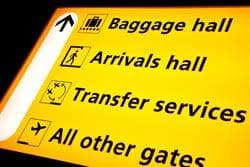
The International Terminal handles overseas arrivals and departures. For most passengers, the useful detail is simple: arrivals and baggage collection are on Level 2, while departures and check-in are on Level 4. That matters when you are arranging a pickup, because the meeting point for an arriving group may not be the same level as the departure drop-off point.
The Domestic Terminal is used by Qantas, Virgin Australia, Jetstar and regional carriers. It has airline-specific areas, nearby parking, train access and ground transport zones. Domestic arrivals are usually faster than international arrivals, but groups still need time for baggage collection, toilet stops, lost bags, children, mobility needs and the simple fact that not everyone walks out of the aircraft at the same speed.
If your group has a connecting flight between the Domestic and International terminals, do not treat it as a short walk. Allow time for the transfer itself, plus waiting time, security, check-in and any baggage handling required by your airline.
Getting Between The Terminals
Brisbane Airport operates a complimentary Terminal Transfer Bus between the Domestic and International terminals. The service runs daily for most of the day and night, generally about every 10 minutes, with the trip itself taking only a short time once the bus is moving. There are also airport shuttle services connecting Skygate, DFO and AIRPARK.
Airtrain also serves both terminals, with a station at each one. It connects Brisbane Airport with the Brisbane CBD and continues towards the Gold Coast, making it a useful option for solo travellers, couples and people travelling light.
For groups, the calculation is different. A train fare is charged per person, luggage still has to be carried through stations, and most groups need another transfer at the other end to reach a hotel, conference venue or private address. If you are travelling with suitcases, children, elderly relatives, event equipment, instruments, golf clubs or sports gear, a direct minibus transfer is often the simpler choice.
Transport Options From Brisbane Airport
Brisbane Airport offers the usual mix of transport options: Airtrain, taxis, rideshare, public buses, private transfers, parking and rental cars. Each one has its place.
Airtrain is useful for travellers heading to central Brisbane or continuing towards the Gold Coast by rail. Taxis and rideshare cars are easy for small groups, though availability, airport access fees, luggage space and peak demand can affect the experience. Rental cars suit travellers who want to drive themselves around Queensland, provided they are comfortable with traffic, parking and navigation after a flight.
Minibus hire works best when the journey is about more than one person and one suitcase. A pre-arranged transfer keeps the group together from the terminal to the final address. It also removes the designated-driver problem for later event travel, avoids the need to split costs across several cars, and gives the organiser one transport plan instead of five smaller ones.
Approximate road times vary with traffic, weather, roadworks and flight timing. Under normal conditions, Brisbane CBD is often around 20 to 30 minutes away by road. The Gold Coast and Sunshine Coast are often over an hour away, and can take longer in peak traffic, so they should be treated as proper onward journeys, not quick hops. For early morning departures or late-night arrivals, the convenience of one waiting vehicle can be especially valuable.
Pickup And Drop-Off At A Busy Airport
Airport kerbs are not designed for long waits. Drivers usually cannot sit at the terminal indefinitely while a group is still clearing customs, waiting for bags or finding the meeting point. That is why airport transfers work best when the details are clear before the travel day.
For an airport pickup, provide the flight number, airline, terminal, scheduled arrival time, passenger count and luggage volume. International arrivals need extra buffer for immigration, biosecurity and baggage collection. Domestic arrivals may be quicker, but bags, children and group movement still take time.
For airport drop-offs, the departure terminal, airline, flight time and group size matter. A family of five travelling domestically with carry-on luggage is a very different transfer from a 20-person group with suitcases, golf bags and check-in deadlines. A planned drop-off lets the driver choose the right terminal approach and keeps the group from rushing between levels or entrances.
Larger passenger vehicles also need suitable access points. Brisbane Airport has designated areas for commercial vehicles, coaches and larger transfers, and the exact meeting point may differ from the public taxi or rideshare area. The advantage of booking ahead is that the transfer operator can coordinate the pickup properly rather than leaving the group to work it out after landing.
Brisbane Airport's Runways And Growth
The airport's growth is not only inside the terminals. Brisbane Airport now operates with two parallel runways, including the new parallel runway that opened in 2020. That project changed the airport from a future-growth story into a much larger operating airport, with more capacity for domestic and international services.
For travellers, the runway details are less important than what they mean in practice: Brisbane is a serious aviation hub, and passenger numbers will continue to be strong as Queensland grows, tourism expands and major events bring more visitors into the region.
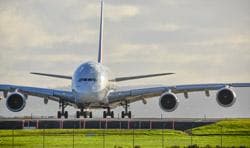
The airport can also handle large long-haul aircraft, including aircraft such as the Airbus A380. That is useful as a sign of scale, but the practical point remains the same: when a large international flight lands, a lot of people and luggage move through the terminal at once. Groups that have a transfer already arranged are better placed than those trying to make a plan from the arrivals hall.
A Short History Of Brisbane Airport
Brisbane's aviation story goes back well before the current airport precinct. Earlier airfields at Archerfield and Eagle Farm played important roles in the city's development, with Eagle Farm becoming especially significant during the Second World War.
The modern Brisbane Airport opened on the former Cribb Island site in 1988 and was later privatised in the 1990s. Since then, the airport precinct has continued to expand with new roads, terminals, commercial areas, parking, retail precincts and runway capacity.
That history gives the airport a little character. It is not just a place to pass through; it is part of Brisbane's growth as a city and Queensland's connection to the rest of Australia and the world.
Why Group Airport Transfers Make Sense
Airport transfers are easy to underestimate until the group is standing outside the terminal. One person has the hotel address. Another is waiting for oversized luggage. Someone else has booked a rideshare from a different pickup zone. The corporate guest who landed first is already at the hotel, and the last family is still waiting for a child seat.
A minibus transfer removes a lot of that friction. Everyone travels in the same vehicle, luggage stays together, and the group arrives at the same time. That is useful for:
- Families and multi-generational groups travelling with children, prams or extra bags.
- Corporate and conference groups that need to arrive together.
- Wedding guests moving between the airport, hotels and venues.
- Sports teams with equipment, uniforms or medical kits.
- School and community groups where supervision matters.
- Cruise passengers heading between Brisbane Airport and the Brisbane International Cruise Terminal.
- Visitors continuing to the Gold Coast, Sunshine Coast or regional Queensland.
The benefit is not only comfort. It is coordination. A single transfer gives the organiser one vehicle, one pickup time, one driver and one plan.
Choosing The Right Vehicle
The right vehicle depends on both passenger count and luggage. A full 11-seat vehicle may not be the right answer for 11 passengers with large suitcases. A smaller group with golf clubs, surfboards, event displays or musical instruments may need more luggage room than the headcount suggests.
For small airport groups, a 7 seat people mover may be enough. Larger families and compact corporate groups can consider an 11 seat minibus or 13 seat minibus.
For medium and larger groups, a 20 seat minibus, 21 seat minibus or 24 seat minibus may be more suitable. You can also review the full Minibus Hire fleet if your group needs more space, multiple vehicles or a larger coach.
When in doubt, give the real luggage picture. Suitcases, cabin bags, prams, wheelchairs, sports gear, display materials and eskies all change the vehicle choice. A slightly larger vehicle is often more comfortable than a tightly packed transfer after a long flight.
What To Have Ready Before Booking
Airport transfers are easiest to organise when the booking details are clear. Before requesting a quote, gather:
- Flight number and airline.
- Arrival or departure date and time.
- Domestic or International Terminal.
- Number of passengers.
- Number and size of bags.
- Child seat requirements.
- Mobility needs or accessibility considerations.
- Hotel, home, venue or cruise terminal address.
- Any extra stops along the way.
- Whether the group is continuing to the Gold Coast, Sunshine Coast or another regional destination.
These details help match the right vehicle to the job and allow enough time for the journey. Flight delays, early arrivals, baggage collection, customs, traffic and roadworks can all affect the schedule, so airport transfers should be planned with sensible buffers rather than minute-by-minute optimism.
Making Airport Transfers To And From Brisbane Airport
If you are travelling to Brisbane with a group, it is worth arranging the airport transfer before the flight. The airport is busy, the terminals are separated, and the best transport choice is not always the one that looks quickest while you are standing at arrivals with luggage.
A pre-booked minibus gives your group a direct trip from Brisbane Airport to the hotel, office, wedding venue, cruise terminal, home address or next Queensland destination. It also makes departure day easier, because everyone can be collected from one or more addresses and delivered to the correct terminal with time to spare.
To organise a transfer, use the Minibus Hire quote form with your flight and group details. The FAQ can help with common booking questions, and you can contact the team if your transfer includes multiple stops, bulky luggage, child seats, accessibility needs or onward travel beyond Brisbane.
Brisbane Airport is large, busy and still growing. With the right airport transfer, your group can start or finish the trip without losing time to scattered transport, parking stress or luggage confusion.